.png.png&w=1920&q=75)
The B.Tech in Computer Science & Engineering (Artificial Intelligence & Machine Learning) at Tulas University is a comprehensive program that blends fundamental principles of computer science with state-of-the-art methodologies in artificial intelligence (AI) and machine learning (ML). This program is designed to equip students with the skills required to develop intelligent systems, analyze complex data, and innovate across domains such as robotics, automation, healthcare, and finance.
Explore Programme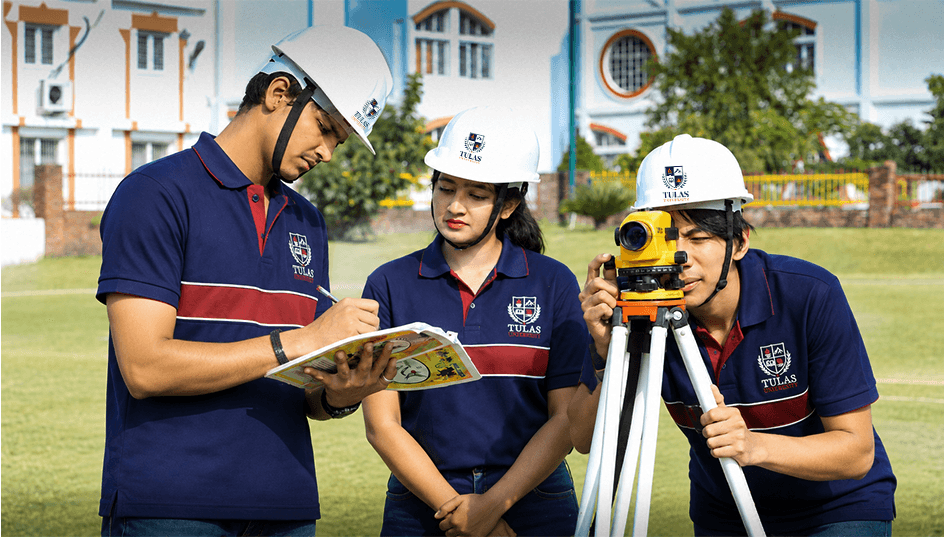
Design, build, and sustain the infrastructure of tomorrow — the Department of Civil Engineering at Tulas University combines structural analysis, geotechnical and environmental engineering, and transportation systems with hands-on labs, live projects, and industrial visits.
.png&w=1920&q=75)
One of the oldest and most prestigious departments at Tulas University — combining mechanical design, manufacturing, thermodynamics, robotics, and energy engineering with state-of-the-art labs and industry collaboration.
.png&w=1920&q=75)
The Department of Electronics & Communication Engineering at Tulas University — established in 2006 — delivering excellence in 5G, IoT, VLSI, Embedded Systems, and Robotics through industry-aligned education and IIT Kanpur collaboration.
.png&w=1920&q=75)
Committed to academic excellence and research since 2006 — the Department of Electrical & Electronics Engineering at Tulas University covers power systems, power electronics, automation, VLSI, control systems, electric vehicles, renewable energy, and smart grids.
.png&w=1920&q=75)
Study Computer Science & Engineering at Tulas and gain expertise in software development, artificial intelligence, data science, cyber security and emerging technologies — through an AI-integrated curriculum.
.png&w=1920&q=75)
The program provides an in-depth understanding of network security, ethical hacking, cryptography, digital forensics and cloud security. With a strong emphasis on hands-on labs, threat analysis and problem-solving, students gain practical experience in penetration testing
Explore Programme.png&w=1920&q=75)
The program builds a deep understanding of statistics, programming, machine learning, big data engineering and artificial intelligence. With a strong emphasis on hands-on learning, students gain practical experience across the full data lifecycle
Explore Programme